Project Results
New paths for twin transition of social enterprises in Arts and craft sector
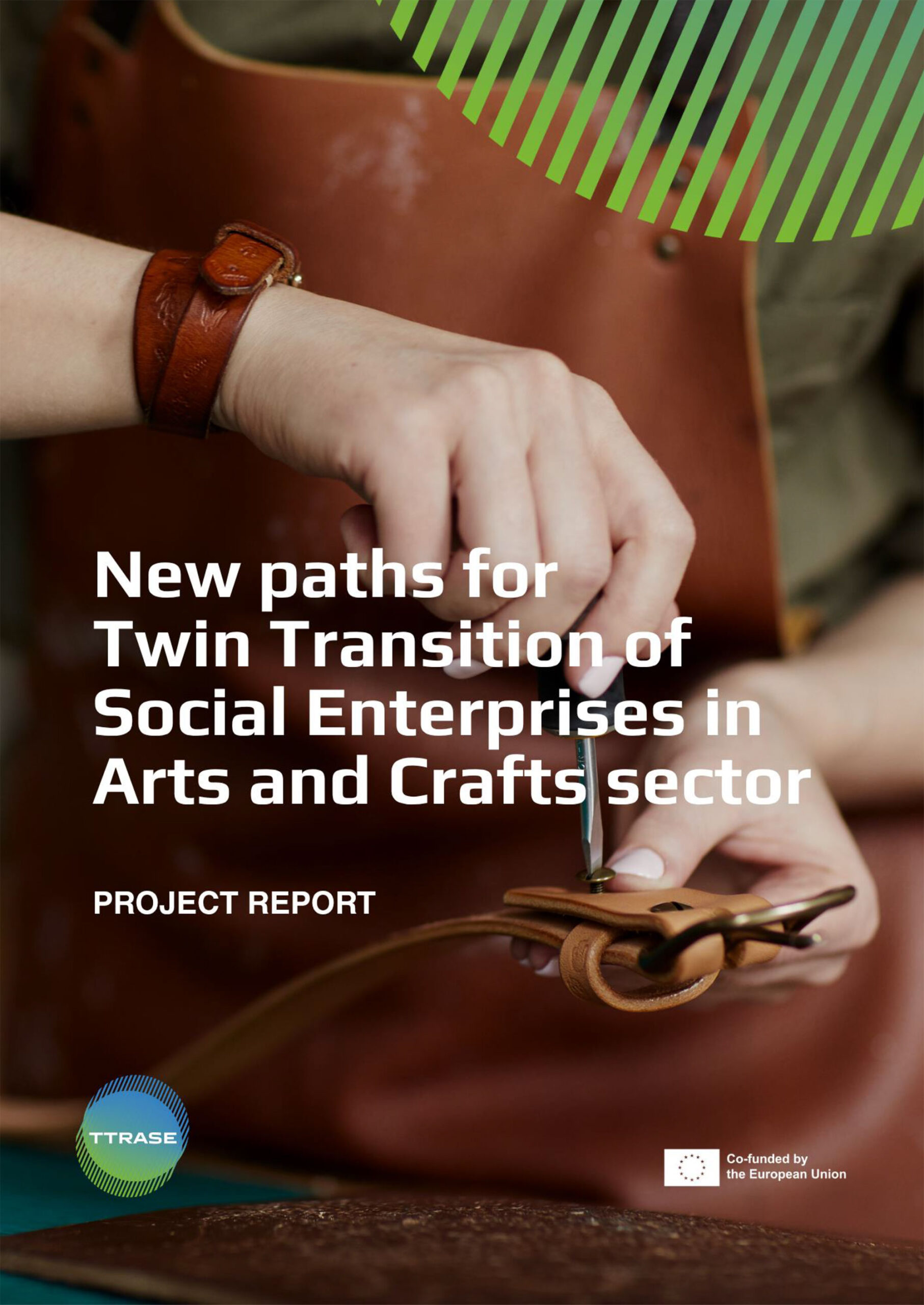
This report is the first public result of the TtraSE project, presenting an in-depth analysis of the twin transition’s impact on the arts and crafts sector.
The research focuses on Social Enterprises (SEs) and the Vocational Education and Training (VET/C-VET) systems supporting them across the European Union and the Western Balkans.
The findings are based on interviews with over 40 organisations. A dual methodology was applied to identify established best practices in EU countries and to map specific training needs and skills gaps in the Western Balkans.
The analysis reveals that while SEs are highly motivated to adopt green and digital practices , they often lack access to sector-relevant training. VET providers are beginning to adapt, but face common barriers like outdated curricula, limited staff expertise, and insufficient collaboration with the labour market.
This foundational document provides crucial insights that will directly inform the project’s next phase: the co-creation of new training guidelines for the sector. Read and discover more!
The TtraSE Compendium of Best Practices: A Roadmap for the Twin Transition
The TtraSE Compendium of Best Practices is a cornerstone of the Erasmus+ Capacity Building initiative, designed to modernise the arts and crafts sector across the European Union and the Western Balkans. This digital resource serves as the analytical foundation for our “Train the Trainers” program, bridging the gap between traditional heritage and the modern requirements of the Green and Digital “Twin Transition.”
The arts and crafts sector is a vital cultural pillar that often lacks access to modern technological and sustainable infrastructure. This Compendium identifies proven, real-world solutions that have already successfully integrated digitalisation and circular economy principles within the social economy. By documenting these proven, high-impact solutions examples, TtraSE provides VET (Vocational Education and Training) and C-VET providers with a standardised, high-quality framework to upgrade their educational offerings.
Our Methodology
Developed through a collaborative three-phase process led by the Academy of Entrepreneurship (AKEP) and Materahub, the Compendium reflects rigorous research from eight partner countries (Italy, Spain, Belgium, Greece, Albania, Montenegro, Kosovo, and Bosnia and Herzegovina). Each entry was selected based on its alignment with European standards like GreenComp and DigComp, ensuring that local expertise in the Western Balkans meets international quality benchmarks.
The Compendium is organised into four specialised categories to help educators navigate the complexities of the modern labor market:
- Training Curricula & Programs: Courses that blend green and digital skillsets.
- Learning Methodologies: Innovative approaches such as blended, peer, or project-based learning.
- Workshop & Mentoring: Targeted interventions for upskilling trainers and social enterprise staff.
- Certification Methods: Validated pathways like micro-credentials and digital badges aligned with the European Qualifications Framework (EQF).
Every best practice is presented in a board format to ensure it is actionable. Each “board” includes:
- Background: The context and origin of the initiative.
- Digital & Green Elements: Specific tools and sustainable practices used.
- Bright Spots: Measurable successes and gained competencies.
- Main Challenges: Real-world obstacles and how they were navigated.
- Tips for Replication: Practical advice for adapting these models to new environments.
By looking beyond a narrow niche and drawing from the broader social economy, this Compendium offers a versatile toolkit that empowers artisans and trainers to become leaders in the sustainable transition.
Explore the Full Database For a deeper look into the specific methodologies, tools, and real-world impacts of each initiative, please consult this file.